South America
Natural Adventures
Nature travel, wildlife tours, adventure travel and
general travel to Peru, Colombia, Galapagos, Costa Rica, Guatemala,
Honduras, Panama, Belize, and Antarctica
HONDURAS
continued
Day
3- Wednesday, March 11: La Laguna Road
An earlier start today, with just coffee, tea or other drink to start
us off, as we head out to La Laguna Road for some of the best birding
of the trip. It’s drier, more open country, and so we want to
have as much time as possible before the day heats up. The road traverses
a variety of habitats from open fields and dry scrub to hig her
elevation pine-oak and humid pine-oak forest, with smaller areas of
broad-leaved forest. At the lower elevations we’ll be looking
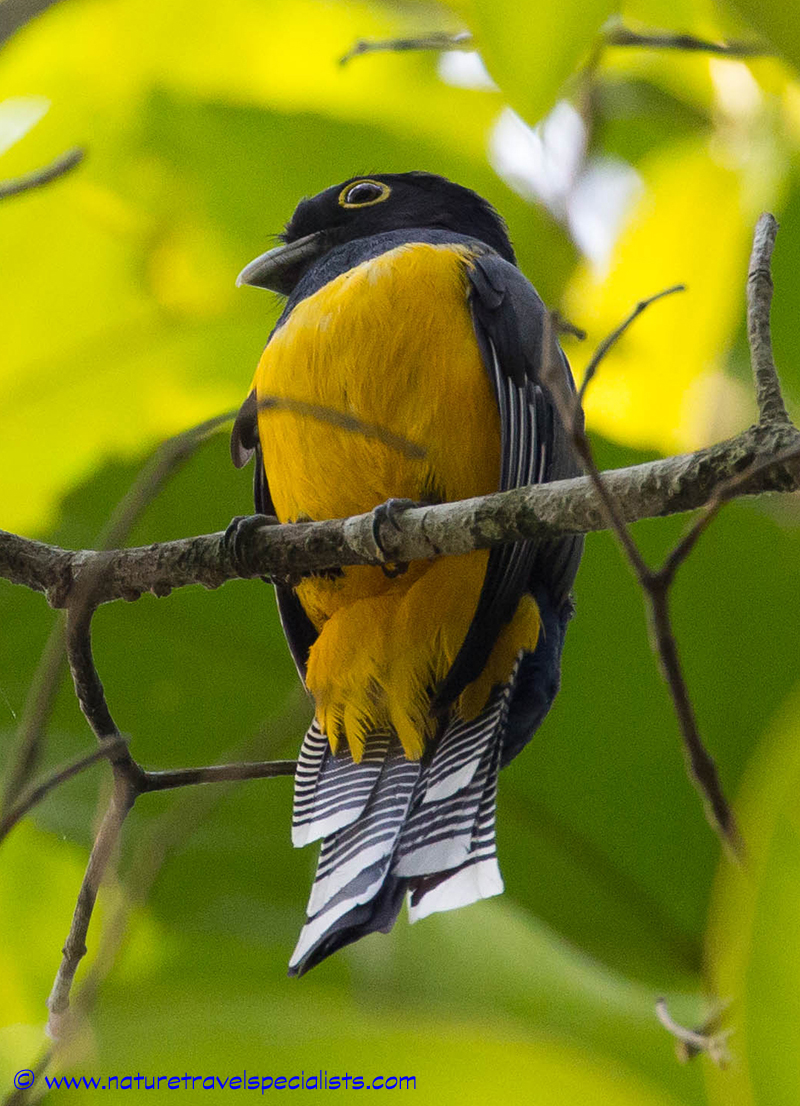
for Elegant Trogon, Lesser Roadrunner, Salvin’s Emerald, Lesser
Ground-cuckoo, Striped Cuckoo, White-throated Magpi
her
elevation pine-oak and humid pine-oak forest, with smaller areas of
broad-leaved forest. At the lower elevations we’ll be looking
for Elegant Trogon, Lesser Roadrunner, Salvin’s Emerald, Lesser
Ground-cuckoo, Striped Cuckoo, White-throated Magpi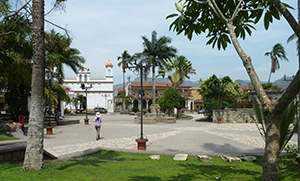 e-jay,
Prevost's Ground Sparrow and Barred Antshrike, among many others.
Around 400 species have been seen in the general Copán area.
We may also see iguanas here. Higher along the road we’ll be
looking for the beautiful Elegant Euphonia, Emerald Toucanet, Golden-olive
Woodpecker and Yellow-throated Brush-finch, again just a few of the
many possibilities. We’ll make both breakfast and lunch picnics
today, to allow more time to enjoy the forests and wildlife of this
areas. Late this afternoon, after cleaning up at the hotel, we’ll
visit the town itself, one of the best preserved in Honduras. At the
same time it is very lived in, so we’ll see both the colonial
architecture and today’s way of life in a small Honduran town.
There’s a time to get some souvenirs and gifts, and then we’ll
have a traditional meal at a local restaurant.
(B,L,D)
e-jay,
Prevost's Ground Sparrow and Barred Antshrike, among many others.
Around 400 species have been seen in the general Copán area.
We may also see iguanas here. Higher along the road we’ll be
looking for the beautiful Elegant Euphonia, Emerald Toucanet, Golden-olive
Woodpecker and Yellow-throated Brush-finch, again just a few of the
many possibilities. We’ll make both breakfast and lunch picnics
today, to allow more time to enjoy the forests and wildlife of this
areas. Late this afternoon, after cleaning up at the hotel, we’ll
visit the town itself, one of the best preserved in Honduras. At the
same time it is very lived in, so we’ll see both the colonial
architecture and today’s way of life in a small Honduran town.
There’s a time to get some souvenirs and gifts, and then we’ll
have a traditional meal at a local restaurant.
(B,L,D)
Day
4 – Thursday, March 12: Copán Ruinas/The Lodge at Pico
Bonito
We say farewell to Copán Ruinas this morning, heading back
to San Pedro Sulas and then east to The Lodge at Pico Bonito. Depending
on how our group feels we may make a detour to a nice waterfall along
the way to break the journey. Lunch will give us chance to stretch
our legs if we don’t make the detour,
as the journey takes about six and a half hours. As on the transfer
in our guide will be with us, so we can make stops if his keen 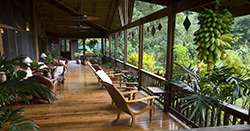 eyesight
– or the group’s – sees a bird of interest along
the way. As we hea
eyesight
– or the group’s – sees a bird of interest along
the way. As we hea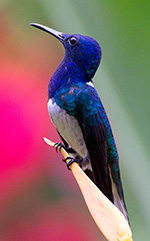 d
east from San Pedro Sulas
we’ll notice both the countryside and the towns and villages
get richer as we enter a wetter part of the country with good agricultural
land and more light industry. Approaching our destination the mountains
appear, virtually running down to the coast. Pico Bonito, located
in Pico Bonito National Park, stands out, as it will for us for the
next four days, as the Lodge is nestled at its foot, providing views
to the peak from the restaurant and grounds. On arrival we check in
and have time to freshen up and rest a bit, then meet for a pre-dinner
drink and to discuss our plans while here. However, some may be tempted
to forgo the rest to spend time getting photos of the hummingbirds
at the feeders, including the beautiful White-necked Jacobin, large
and spectacular Violet Sabre-wing and Long-billed Hermit.
(B,L,D)
d
east from San Pedro Sulas
we’ll notice both the countryside and the towns and villages
get richer as we enter a wetter part of the country with good agricultural
land and more light industry. Approaching our destination the mountains
appear, virtually running down to the coast. Pico Bonito, located
in Pico Bonito National Park, stands out, as it will for us for the
next four days, as the Lodge is nestled at its foot, providing views
to the peak from the restaurant and grounds. On arrival we check in
and have time to freshen up and rest a bit, then meet for a pre-dinner
drink and to discuss our plans while here. However, some may be tempted
to forgo the rest to spend time getting photos of the hummingbirds
at the feeders, including the beautiful White-necked Jacobin, large
and spectacular Violet Sabre-wing and Long-billed Hermit.
(B,L,D)
Day
5 – Friday, March 13: The Loop Trail and Cuero y Salado Wildlife
Refuge
Breakfast will be early this morning, a habit we’ll keep, so
we can start the loop trail with some time at the Toucan Tower, a
platform tower overlooking the Rio Coloradito about two hundred feet
below. Though we’ll be too  early
for raptors (we'll be back for those later), the trees are popular
with a variety of birds, including the large and
early
for raptors (we'll be back for those later), the trees are popular
with a variety of birds, including the large and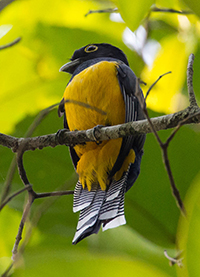 ubiquitous Montezuma Oropendula, Keel-billed Toucan, and our main
goal, Lovely Cotinga. Euphonias, Spot-breasted Wren, three kinds of
parrots, Gartered Trogon and Whooping Motmot are other birds commonly
seen. After the tower we head up the trail, mostly steps and a little
steep in parts, but at our leisurely pace should be fine for anyone
of normal mobility and who can manage a couple of flights of steps
before preferring to rest. The trail borders then enters the National
Park, and we quickly move into the range of different birds, including
the sought-after Keel-billed Motmot, a park specialty that is rare
and hard to find elsewhere in the country – and not always easy
here. However, our long stay gives us plenty of opportunity to look
for the bird if our first try is unsuccessful. Other birds seen along
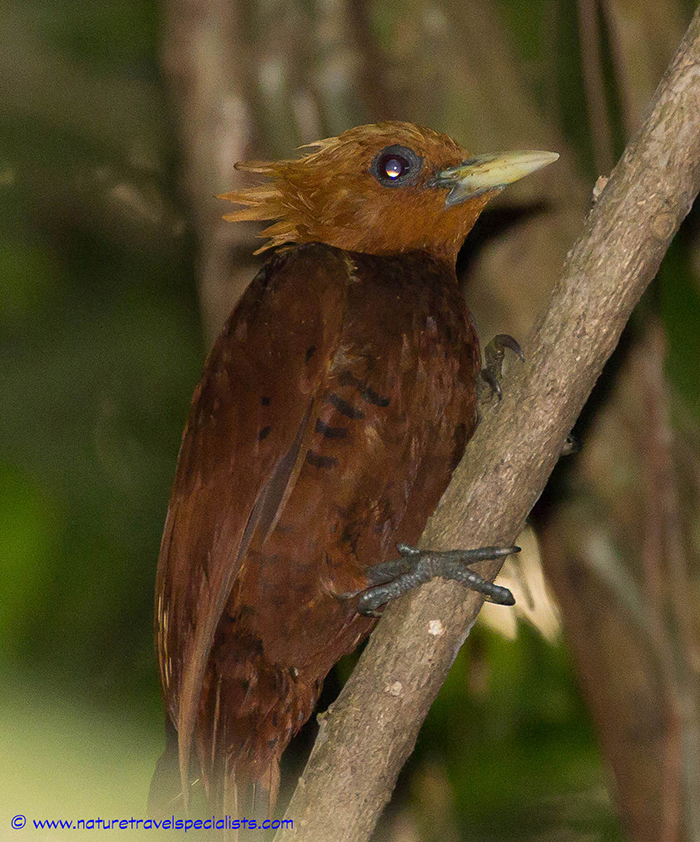
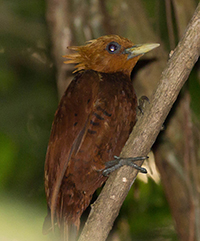
the trail include Chestnut-colored Woodpecker, even with its subdued
colors one of the most striking, Red-throated Ant-tanager, Stub-tailed
ubiquitous Montezuma Oropendula, Keel-billed Toucan, and our main
goal, Lovely Cotinga. Euphonias, Spot-breasted Wren, three kinds of
parrots, Gartered Trogon and Whooping Motmot are other birds commonly
seen. After the tower we head up the trail, mostly steps and a little
steep in parts, but at our leisurely pace should be fine for anyone
of normal mobility and who can manage a couple of flights of steps
before preferring to rest. The trail borders then enters the National
Park, and we quickly move into the range of different birds, including
the sought-after Keel-billed Motmot, a park specialty that is rare
and hard to find elsewhere in the country – and not always easy
here. However, our long stay gives us plenty of opportunity to look
for the bird if our first try is unsuccessful. Other birds seen along
the trail include Chestnut-colored Woodpecker, even with its subdued
colors one of the most striking, Red-throated Ant-tanager, Stub-tailed
 Spadebill
and Slaty-tailed Trogon
Spadebill
and Slaty-tailed Trogon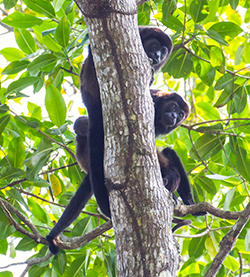 .
There are leks of both Red-capped and White-collared Manakins adjacent
to the trail, and their snapping is frequently heard as we walk; we
can usually get good looks at them, even if somewhat fleeting though
repeated. There are three species of tinamous here, but as in most
places much more often heard then seen. We’ll also be looking
for the non-avian wildlife of the lodge grounds and Park. Although
many mammals move to higher elevation during the heat of summer, our
cooler month tours give us great chances of White-faced Capuchin,
Spider Monkey and Mantled Howler. Peccaries, Tayra, Kinkajou, and
the aptly named Variegated Squirrel are other local mammals. Jaguar
and Ocelot are rarely seen, even though regularly photographed by
the game cameras we pass on the Loop Trail.
.
There are leks of both Red-capped and White-collared Manakins adjacent
to the trail, and their snapping is frequently heard as we walk; we
can usually get good looks at them, even if somewhat fleeting though
repeated. There are three species of tinamous here, but as in most
places much more often heard then seen. We’ll also be looking
for the non-avian wildlife of the lodge grounds and Park. Although
many mammals move to higher elevation during the heat of summer, our
cooler month tours give us great chances of White-faced Capuchin,
Spider Monkey and Mantled Howler. Peccaries, Tayra, Kinkajou, and
the aptly named Variegated Squirrel are other local mammals. Jaguar
and Ocelot are rarely seen, even though regularly photographed by
the game cameras we pass on the Loop Trail.
After
our morning exertions there’s time for some rest, a lazy swim
in the pool before lunch at the lodge. However, as the open-air restaurant
overlooks the grounds, bring binoculars and camera for the hummingbirds,
Social and Great Kiskadee flycatchers, Yellow-winged Tanagers and
Collared Aracaris that frequent the grounds.
the
itinerary continues >>>